

schedule your consultation865-281-1000

Recent Blog Posts
Are There Driver’s License Restrictions for Teens in Tennessee?

Sitting in the passenger seat with a new driver can make a short drive feel like a rollercoaster ride. Their inexperience on the road can lead to many close calls and unintentional traffic violations. Recognizing this danger, many states implement restrictions on new drivers’ licenses to give young motorists the driving experience they need while also limiting their freedom for safety purposes. What many students may not realize is that there are different levels of licenses, each of which comes with its own regulations. These restrictions may seem minimal as a new driver, but breaking them can lead to traffic violations and legal consequences moving forward.
What Are the Different License Levels?
There are four license levels recognized in the state of Tennessee, and each has its own restrictions:
-
Learner Permit (PD): Though this may not be considered a full-fledged driver’s license, a learner permit allows those at least 15 years of age to drive. Anyone who has a learner permit must be accompanied by a licensed driver in the front seat who is 21 years or older at all times. These drivers are not allowed to drive after 10 pm or before 6 am. Every passenger, regardless of their place in the car, must wear a seatbelt while the car is in motion. As is true with every level of driver in Tennessee, cell phone use is prohibited.
What Are the Possible Verdicts if I Fight My Tennessee Traffic Ticket?

Seeing blue and red flashing lights in your rearview mirror can bring on some of the worst feelings. You may panic about the level of violation that you are about to be given, your stomach drops at the thought of the fine that you may be required to pay, and you consider how this incident will affect your driving record. A single ticket with a low fine may seem like a small price to pay when compared to the other legal consequences that you can receive for breaking the law. However, the points assigned to speeding violations can quickly add up on your driving record. With too many points, you could lose your driver's license. While you can choose to accept the ticket that you have been given, fighting your traffic violation may often be the better option.
Potential Outcomes
To fight your ticket, you will need to appear in court to present your case, but before deciding to go through this legal process, you should understand what the possible verdicts and results may be:
What Acts Constitute Property Crimes in Tennessee?

Many people consider stealing to be a minor crime, since in many cases, no one gets hurt in the process. While a property crime may not always lead to the injury or death of another person, it is far from a victimless crime. Property crimes often involve taking someone’s belongings away from him or her without permission. This can include physically taking the property from an individual or destroying it. In Tennessee, one out of every 35 people has the chance of becoming a victim of a property crime. In 2018 alone, there were more than 137,708 theft cases in the state of Tennessee. Although it may seem fairly cut-and-dry, many people can face property crime charges without realizing that their actions were considered a criminal act. Some common property crimes include:
Burglary
In order to commit a burglary, a person must unlawfully enter a structure to commit a theft, an assault, or a felony. “Structures” are not limited to people’s homes, and they can include apartments, trailers, barns, offices, railroad cars, houseboats, stables, vehicles, or ships. Unlawful entry does not need to be done forcefully for it to be considered a burglary. Any burglary that is committed at someone’s place of living may be classified as an aggravated burglary, thus resulting in more serious consequences. Burglary that does not occur in someone’s residence is considered a Class D felony, while an aggravated burglary is a Class C felony. Depending on the type of felony charged, an individual could face between 2 and 15 years in prison and $10,000 in fines.
How Are Different Types of Murder Charges Classified in Tennessee?
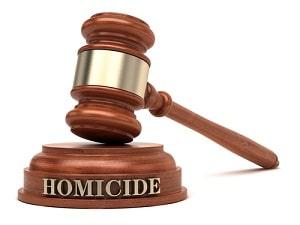
As in every state across the country, murder is considered one of the most serious crimes that a person can commit in Tennessee. When people hear the term murder, they often imagine one person killing the other out of spite or in a violent manner. While this can be the case, there are many other ways that someone can kill another – and the law recognizes this. Tennessee legislation identifies six distinct forms of homicide to show that not all crimes are equal, and neither are their consequences. If you are facing any type of homicide charge, a skilled criminal defense attorney can use these various classifications to your advantage to determine how charges may be reduced or even dismissed altogether. Understanding the various charges is a good first step in formulating a strong defense strategy.
Homicide Classifications in Tennessee
What Are the Consequences for Violating an Order of Protection in Tennessee?

Orders of protection, more commonly known as restraining orders, are meant to provide safety for victims of domestic violence or abuse, and they are not taken lightly. Although a restraining order may just look like a piece of paper, those who violate these orders will face serious legal consequences, and alleged offenders should hire an experienced criminal defense attorney immediately. The best way to avoid these harsh consequences is to understand what may be included in a Tennessee order of protection.
Who Qualifies for an Order of Protection?
As is true of any legal process, an individual filing for an order of protection must have a valid reason for doing so. Those who simply dislike another person and wish to avoid them do not have a valid stance for a restraining order. Tennessee allows victims of domestic abuse, sexual assault, or stalking to apply for an order of protection. Those who claim to be victims of domestic abuse must have a familial, romantic, or residential relationship with the alleged perpetrator. This is not a requirement for those who have been victims of sexual abuse or stalking.
Can Tennessee Farmers Face Drug Charges with Recent Regulations?

State policies regarding marijuana have been under deliberation throughout the United States for the past decade. With many states legalizing cannabis for medical and recreational use, Tennessee is one of the few states that has made little progress on the matter, aside from its farming population. In 2018, the hemp growing industry was legalized federally, meaning licensed farmers can grow this crop. Opening up this industry to Tennessee farmers has made the state one of the leading producers in the country. According to a USA Today report, Tennessee has seen a 1,581 percent increase of hemp farmers throughout the state, with 3,800 registered growers as of November 1, 2019. These farmers are licensed to grow up to 51,000 acres of hemp throughout Tennessee, which equates to approximately 10 percent of all of the licensed acreage in the United States. New federal regulations have been released for those participating in the 2020 planting season, and with Tennessee’s high percentage of participation, it is important that state farmers and consumers understand the rules being established to avoid facing drug charges.
What Are Possible Alcohol Charges for Minors in Tennessee?

It is fairly well-known that the legal drinking age is 21, making the consumption of alcohol for anyone under this age limit illegal. This has been the legal drinking age in the United States since 1984, when President Reagan signed the National Minimum Drinking Age Act, increasing the legal age from 18 to 21. Since this age limit exists, there are numerous other criminal charges that can be tied to underage drinking. It is important to understand the possible charges that your child may be facing to ensure that you can address these issues and determine the best strategies for defense.
The Various Offenses in Detail
Minors and alcohol are a bad mix, especially in the eyes of the law. What many teens fail to recognize is that they can face legal consequences even if they are not the ones drinking. The following are some of the charges Tennessee minors can face when alcohol is involved:
What Do Self-Defense Laws Look Like in Tennessee?

Most states have laws that exempt those who injure or kill someone from prosecution if they did so in self-defense. Tennessee is one of these states, and it is important for all of the state's residents to know the details of these laws in case they ever fear for their own safety. For anyone facing charges of murder, it is important to work with a skilled criminal defense attorney who has a detailed understanding of the applicable laws regarding self-defense.
Standing Your Ground in Tennessee
“Stand your ground” laws are some of the most common forms of self-defense legislation implemented throughout the United States. Under these laws, individuals are allowed to use deadly force for self-defense if they fear that they are in imminent danger of serious injury or death by another person. Some state laws include a "duty to retreat," in which a person is required to attempt to retreat or run away from an alleged attacker before they are allowed to resort to deadly force in their own defense. However, Tennessee is not one of these states. In Tennessee, if someone enters your home, property, motor vehicle, or a hotel room that you are occupying, you are legally allowed to defend yourself, and you do not need to attempt to retreat before doing so. Experiencing “imminent fear” is one of the only requirements for using deadly force under the state's “stand your ground” law.
What Are "Drug Schedules," and How Can They Affect a Criminal Case?

Drug charges are very common throughout the United States, and Tennessee is no exception. With 80 percent of Tennessee crimes being related to drugs, the state takes drug charges seriously for all offenders. Like all other crimes, those involving drugs are measured on a scale depending on the situation. In other words, some drugs and actions lead to harsher consequences than others. The public may be warned against drug use; however, the legal consequences for controlled substances are not always explained well. This can leave many people unprepared when facing drug charges.
Tennessee Drug Schedules
Controlled substances, also known as drugs, have different levels of effects, making some more dangerous than others. The government analyzes these "danger levels" and creates a hierarchy of charges. This list of controlled substances and their consequences are known as "drug schedules." The federal government classifies all controlled substances into categories to create general drug schedules; however, states often adjust these schedules. Tennessee has seven schedules that rank these substances, with the most serious drugs in the first schedule:
Do I Have to Perform a Breath Alcohol Test in a Tennessee DUI Stop?

Driving under the influence (DUI) is a serious crime, regardless of where you live in the United States. Driving with a substantial amount of alcohol in one's system impairs a driver's ability to drive in a safe manner due to delayed response times and altered senses. According to the Tennessee Department of Safety and Homeland Security, there have been 68,886 alcohol-related traffic crashes since 2009 -- and this is just in Tennessee. The law has limited the amount of alcohol legally allowed in a person’s system for this very reason
How Much Alcohol Is Considered Illegal?
Those with a blood alcohol concentration (BAC) of .08 percent or more are above this “legal limit” in Tennessee. This number is abstract to most, making it difficult to “calculate” what your BAC is before getting behind the wheel. It is impossible to give an exact formula, since all body types are different. However, one can estimate that for every one drink, your BAC increases by about .02 percent. In other words, many people reach their driving limit at four or five drinks.
Arrested? Call Coller.
Jeffrey Coller, Knoxville Criminal Defense Attorney
Knoxville Office
First Horizon Plaza
800 S. Gay Street, Suite 2000
Knoxville, TN 37929P865-281-1000
 Map & Directions
Jacksboro Office
105 Church Alley
Jacksboro, TN 37757P865-281-1000
Map & Directions
Follow Us


 The use of the Internet or this form for communication with the firm or any individual member of the firm does not establish an attorney-client relationship. Confidential or time-sensitive information should not be sent through this form.
I have read and understand the Disclaimer and Privacy Policy.

Results listed are not a guarantee or indication of future case results.